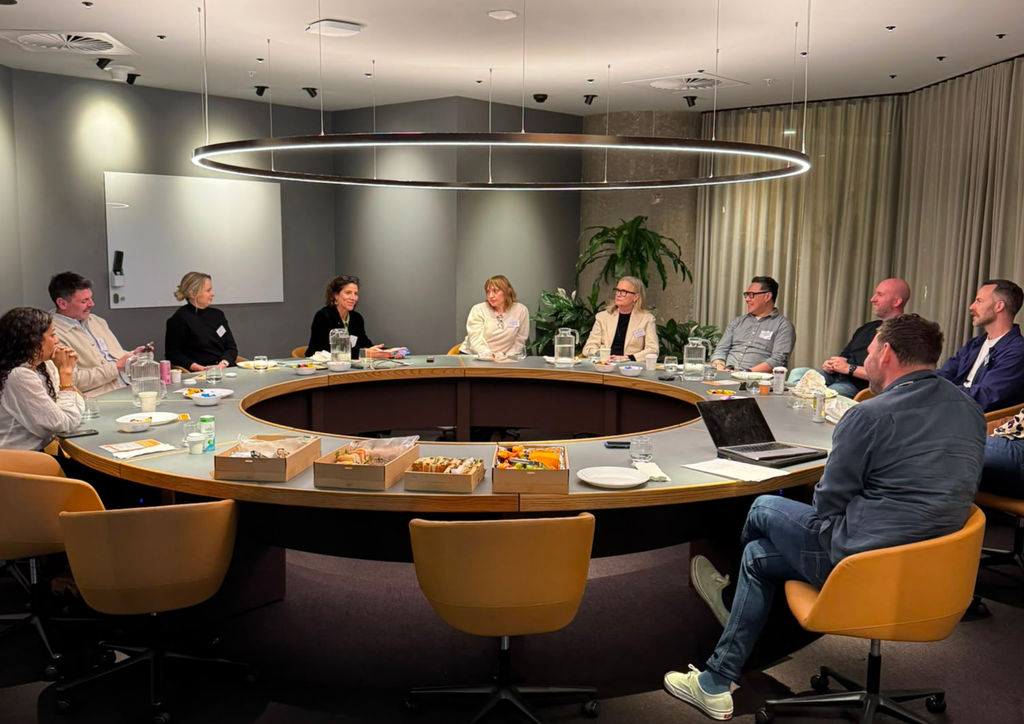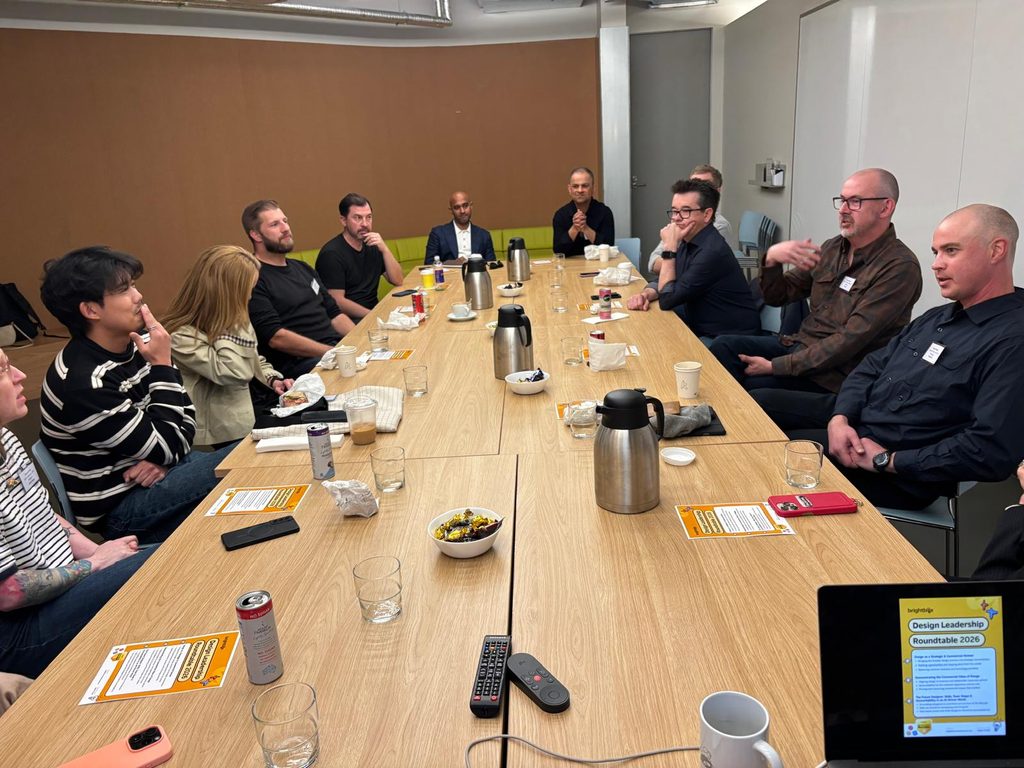
Every few months I bring together a small group of senior Design, Research, CX and Product leaders for one of our Brightbox Design Leadership Round Tables. The latest was in Melbourne, and like every session, it ran on one rule: what’s said in the room stays in the room.
So this piece shares the broad themes, not the conversation. They echo what I hear from Design leaders across the market most weeks, and they all point back to one question: what is the role of a designer when designing is open to everyone?
Design leadership starts with the language of the business
To be fair, Design leaders have talked about moving upstream for years, and getting involved earlier is a good start. Strategy tends to sit a level above that, in decisions about which markets to enter, which problems are worth solving and where the organisation invests next.
The Design leaders I see with the most influence spend less time making the case for Design and more time talking about customers, revenue, cost and risk. Their methods sit underneath the conversation as the way they reach an outcome. Influence follows from that, built over time through relationships with Product, Technology and the executive team, and through a clear understanding of what those leaders are accountable for.
Customer understanding is a commercial asset
A financial model can show that a market looks attractive, but it can’t tell you whether customers will behave the way the spreadsheet assumes. That gap is where Design and Research earn a place in strategy conversations.
Some of their most valuable work, such as steering an organisation away from the wrong investment, will never show up neatly on a KPI dashboard. Measuring Design only through conversion rates misses that part of the picture.
AI is changing what Design is valued for
As Product Managers, engineers and AI tools all become capable of producing interfaces, owning the production layer gives Design less of an edge. Craft and quality still matter, and knowing the latest AI tools will soon be expected of everyone, much like Figma proficiency became a baseline.
What organisations will pay for is judgement about where, why and how AI should be used. That calls for more technical fluency: enough to understand how a system behaves, where it falls short and where a person needs to stay in the loop. It also calls for the confidence to say when AI isn’t the right answer.
When everyone can create, someone needs to define good
AI can scale inconsistency as easily as it scales quality. That gives Design a broader role in setting the foundations others build on, including design systems, accessibility standards, customer principles and clear ways to assess AI-generated work.
It also moves Design further left, towards the questions that come before any artefact exists. Who is this for, which problem is worth solving and what should stay human? Those were always core Design skills, and AI may pull the profession back towards them.
The junior talent question
If organisations decide they need fewer but more experienced people, it’s fair to ask how anyone becomes experienced. Many of the tasks that once trained junior designers and researchers are the tasks AI now handles, and taste and judgement are usually built through years of making things and getting them wrong.
Graduate programmes, mentoring and apprenticeship-style development may matter more from here, even when they sit awkwardly against short-term efficiency targets. Today’s junior hire is the senior practitioner an organisation will need in five years.
Where Design’s value sits next
What a designer looks like in five years is still an open question. What feels clearer is that Design’s value is moving away from artefacts, tools and methodologies, which AI is commoditising, and towards the capabilities underneath them: understanding people and business, framing the right problem, exercising judgement and knowing when AI should be used.
There’s a hopeful side too. Ideas that sat in Figma for years because they were too costly to build may finally reach customers, and designers may get much closer to building the experience themselves. For design leadership, the opportunity is to expand beyond the traditional boundaries of the role and help teams tell the difference between what can be made and what should be made.
Our Design Leadership Round Tables are invite-only and run at our expense. If you lead a Design, Research or CX team and would like to join a future session, get in touch.